|
1
|
|
|
2
|
- Demonstrate various devices & projects that utilize microcontroller
operation …
- … and some that do not!
- (Hopefully) Excite you with the possibilities and enable you to begin
experimenting!
|
|
3
|
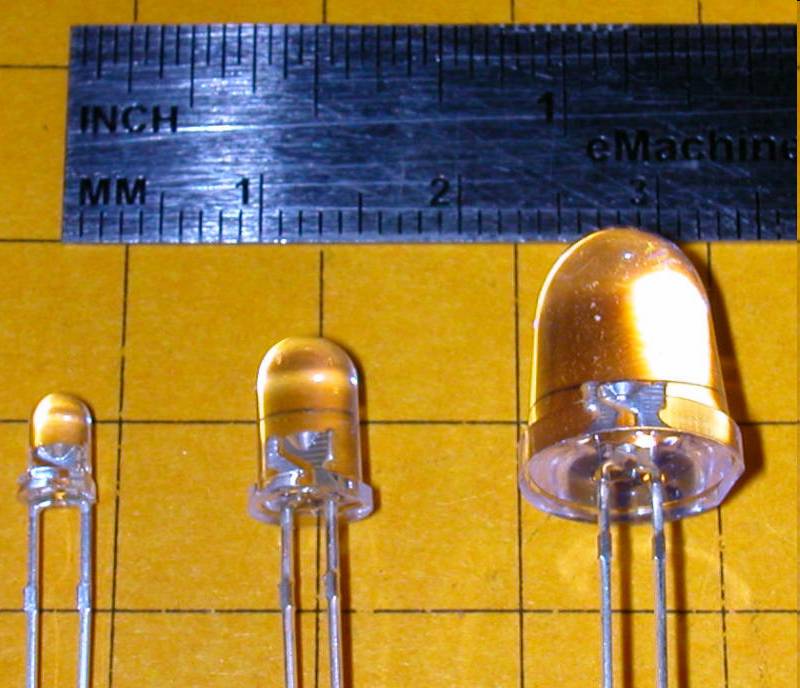
- LEDs have become a major lighting source in the last few years
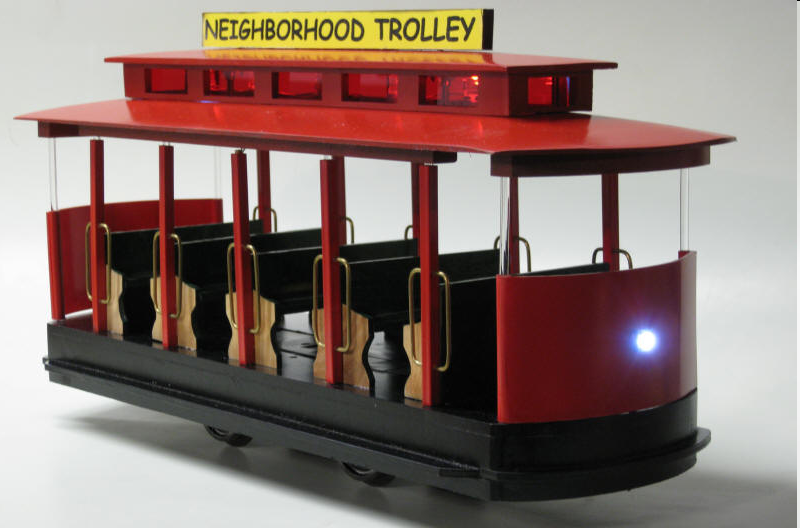
- They are bright enough to be used as headlights on our model locomotives
- Their cost and power consumption makes them the ideal light source for
model railroads
|
|
4
|
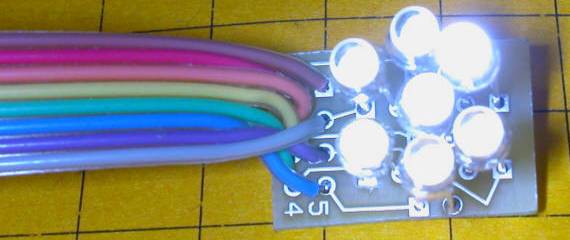
- Groups of LEDs can be configured to do some remarkable things
- …like creating a realistic Mars light
|
|
5
|
|
|
6
|
- Or even a headlight that is too bright to view directly
- That can turn into a single bulb Mars light
|
|
7
|
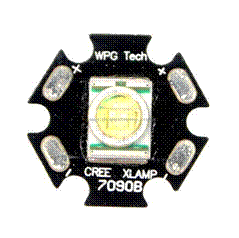
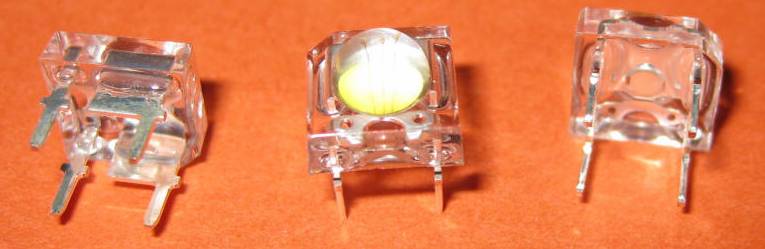
- Some new LEDs have three or more diode junctions on one housing to
increase brightness and bring down the cost!
|
|
8
|
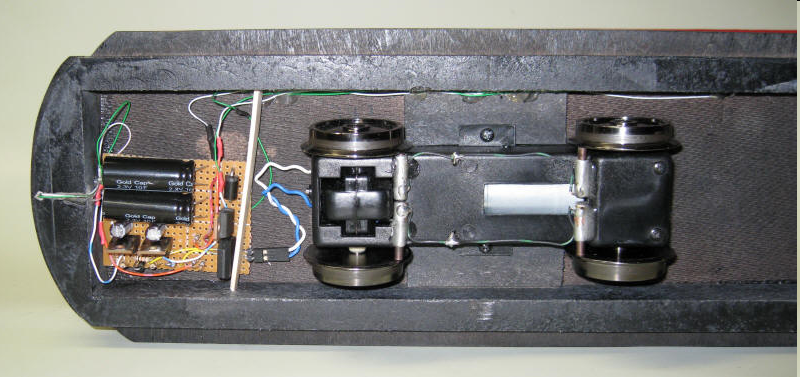
- Small supercaps can keep LEDs shining for many minutes after they are
removed from track power
|
|
9
|
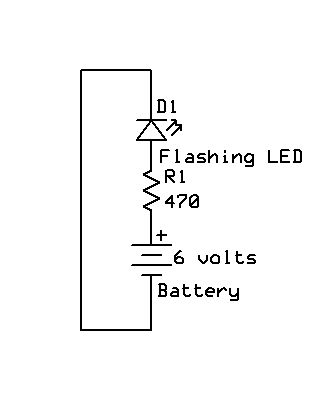
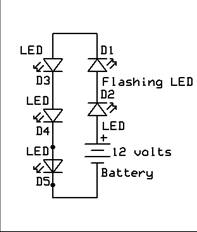
- Flashing LEDs have a built in circuit that causes them to flash when
power is applied (<$1.00 each @
AllElectronics.com)
- Use one flashing LED to
flash several non-flashing
- LEDs
|
|
10
|
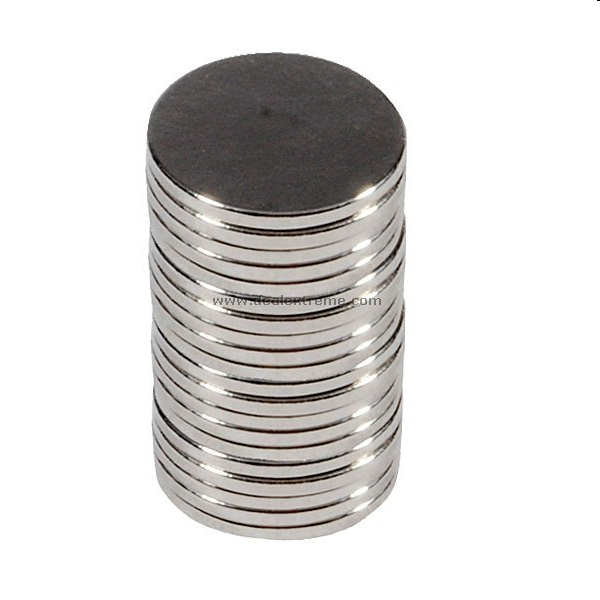
- Magnets are used to activate reed switches and for many other things on
our railroads
- Two super sources:
- http://www.dealextreme.com/details.dx/sku.5962 (20 @ 10mmx1mm for $2.69
delivered)
- http://kjmagnetics.com/ for just about any size / shape / strength you
might need
|
|
11
|
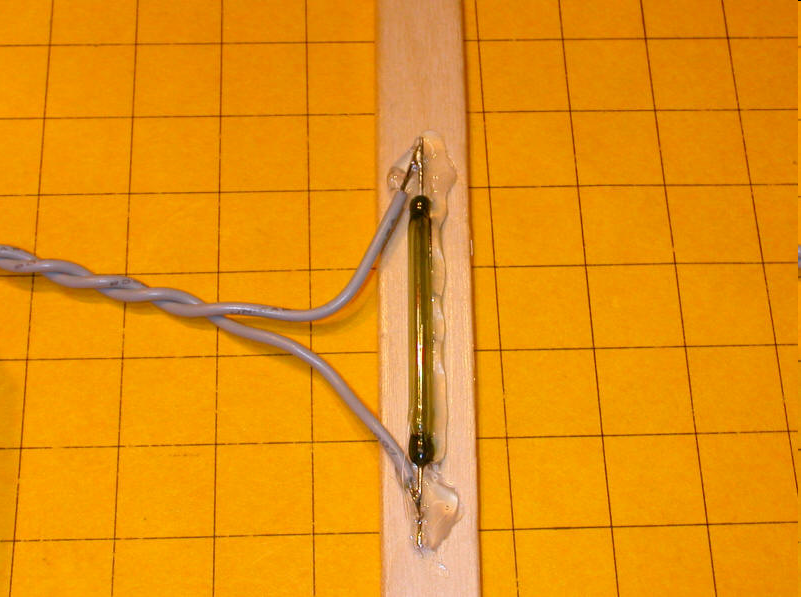
- LEDs in cars and buildings can be turned on or off with Latching Reed
Switches
- Bring a magnet near one end and the switch closes & stays closed
- Bring a magnet near the other end and the switch opens
- These unusual devices use NO POWER when the are off
|
|
12
|
|
|
13
|
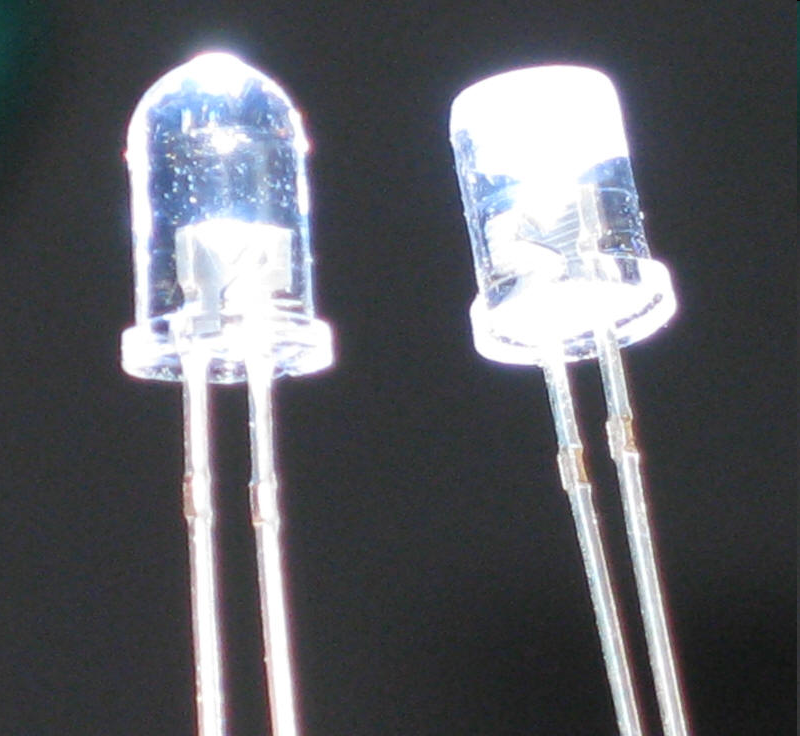
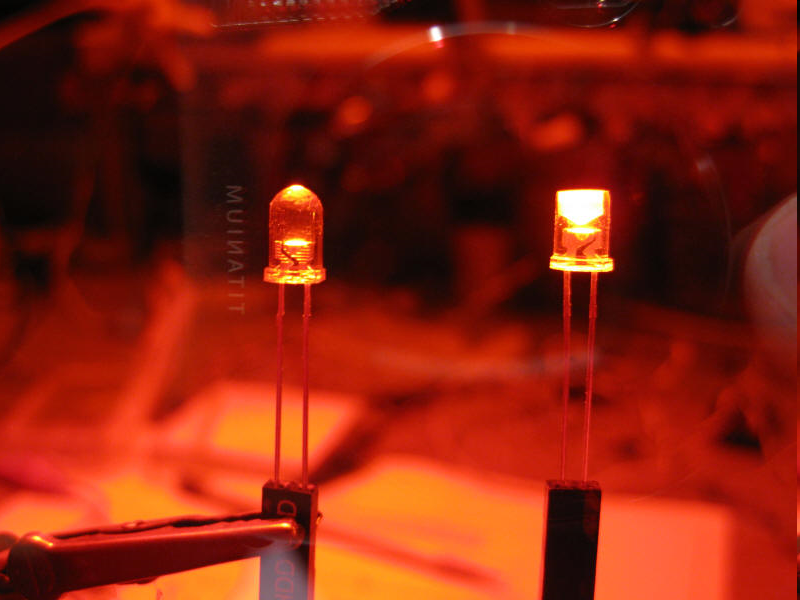
- The difference in brightness while viewing from the side can be dramatic
|
|
14
|
|
|
15
|
|
|
16
|
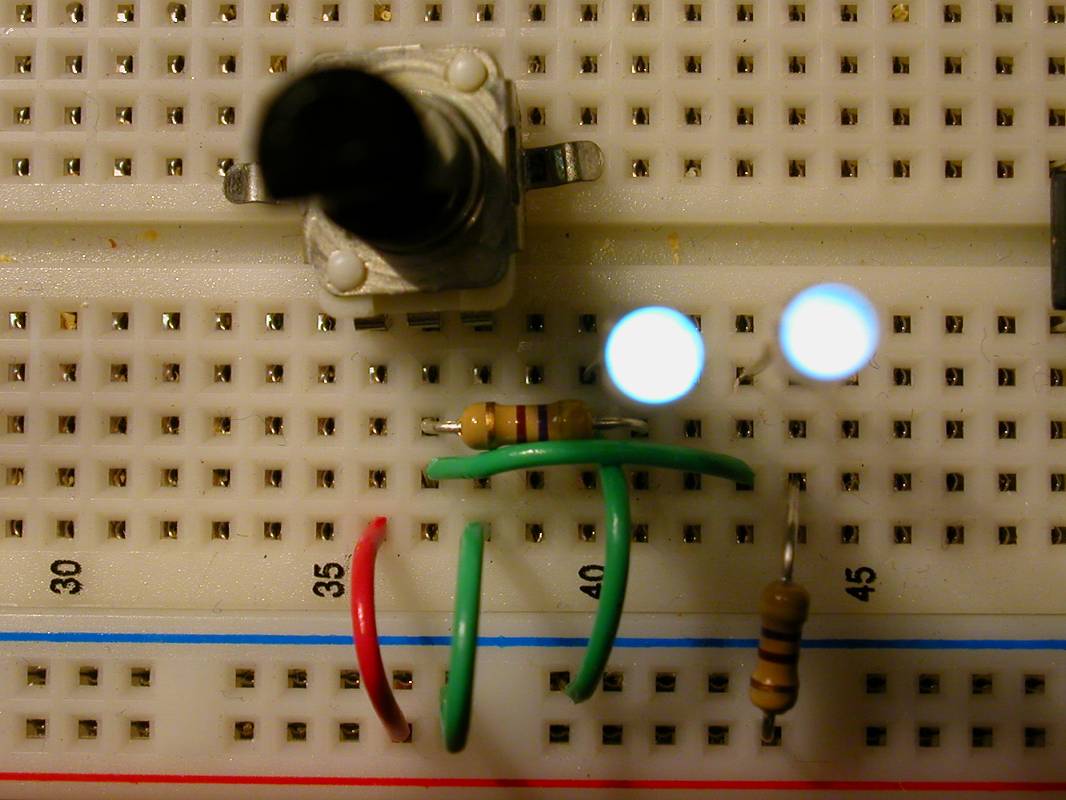
- LEDs are current driven devices
- If you don’t limit current they will burn themselves up
- A current limiting resistor keeps the current down even as the voltage
increases
- See TrainElectronics.com articles on LEDs for details!
|
|
17
|
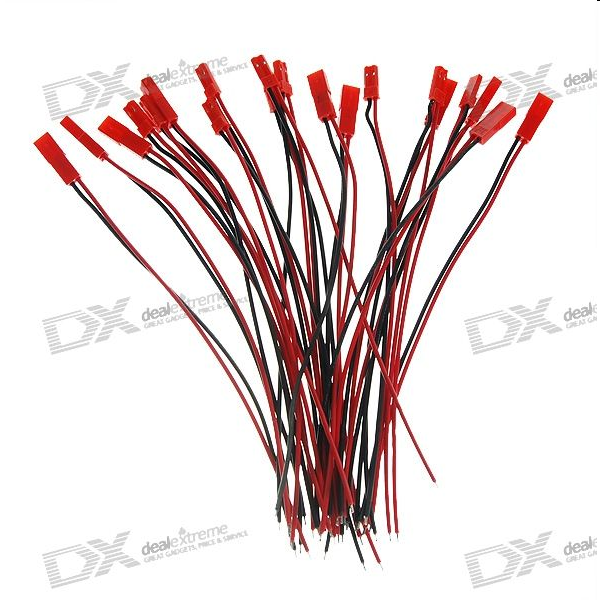
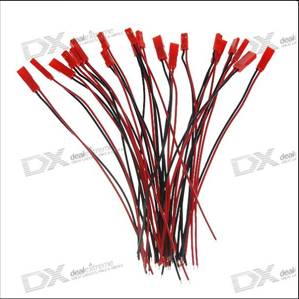
- We are always looking for ways to connect electrical devices together
- For low current
use:
- Deal Extreme
item # 15234
- $2.78 for 10
pair including
shipping!
|
|
18
|
|
|
19
|
|
|
20
|
|
|
21
|
|
|
22
|
|
|
23
|
|
|
24
|
|
|
25
|
|
|
26
|
|
|
27
|
|
|
28
|
|
|
29
|
|
|
30
|
|
|
31
|
|
|
32
|
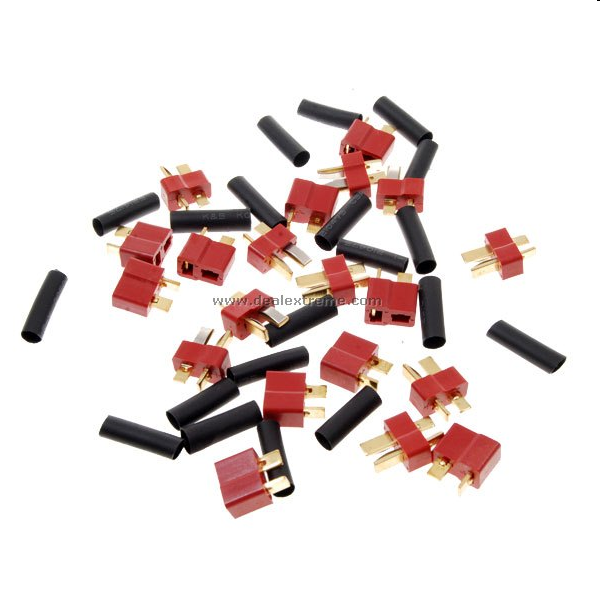
- Connectors:
- High current for
track and battery
connections:
- Deal Extreme
item # 10788
- $6.26 for 10
pair including
shipping!
|
|
33
|
|
|
34
|
|
|
35
|
|
|
36
|
|
|
37
|
|
|
38
|
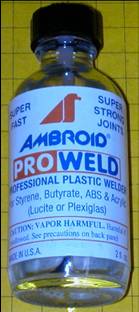
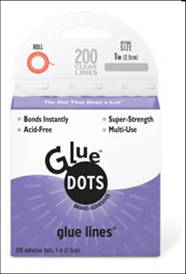
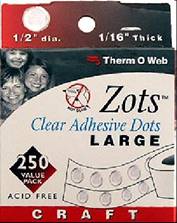
- Great for quick temporary or
permanent connections
- Similar to the “goo” on the back of a new credit card
- I use it in place of hot melt glue
- DOTS or ZOTS brand
- Michaels (don’t forget the
40% off coupon!)
|
|
39
|
|
|
40
|
|
|
41
|
|
|
42
|
|
|
43
|
|
|
44
|
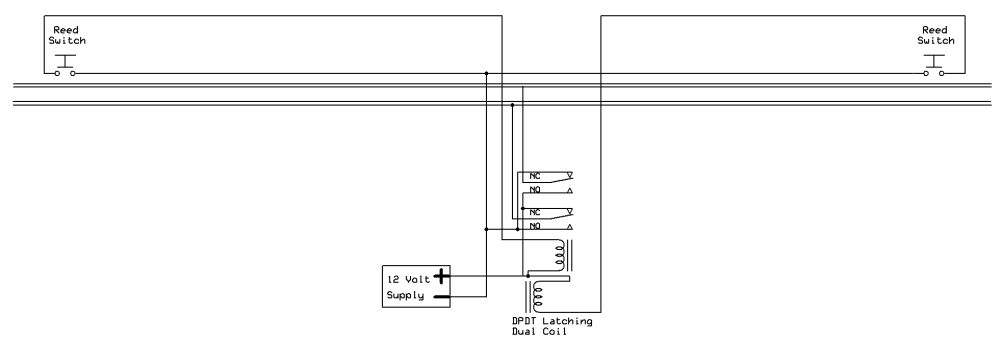
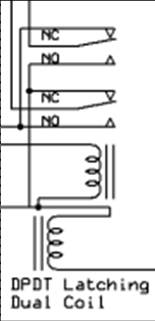
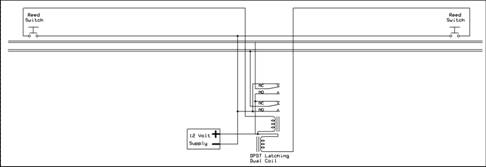
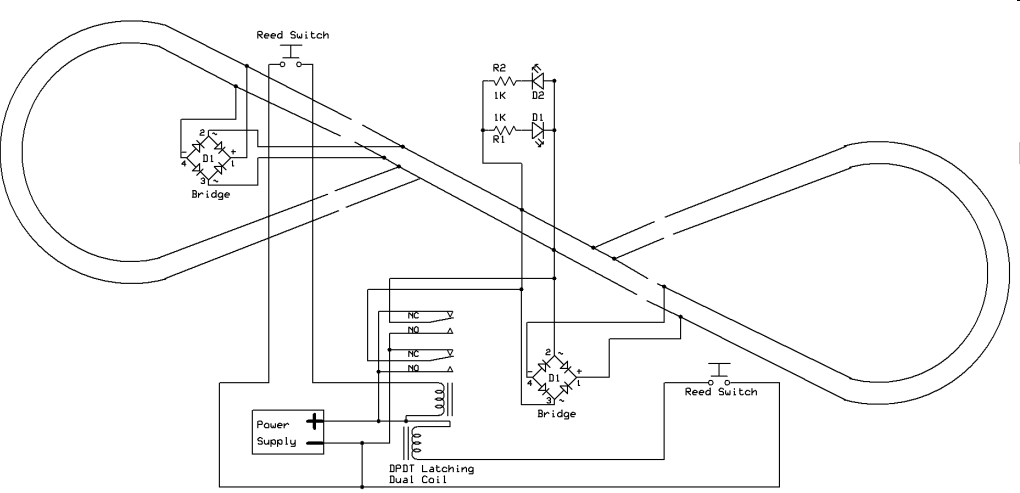
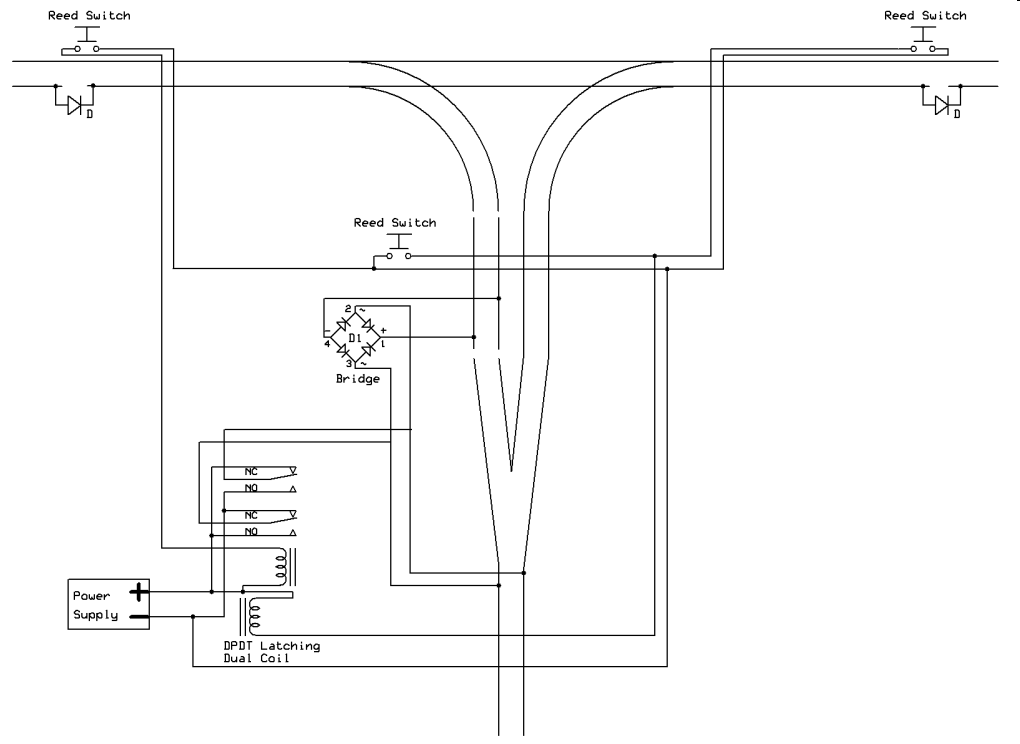
- Have two coils instead of one
- Each coil pulls the contacts one way and leaves them there
- Once latched one way or the other no power is needed to keep the
contacts set as they are
- Only a brief pulse of power is needed
|
|
45
|
- Can be used to make
- a “non-electronic” point-to-point controller
|
|
46
|
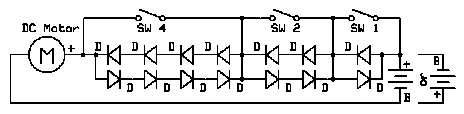
- Pairs of back-to-back diodes can be used to slow DC motors
- Each pair drops the voltage by about 0.7 volts
- This circuit can be adjusted to drop from 0 to 4.9 volts
|
|
47
|
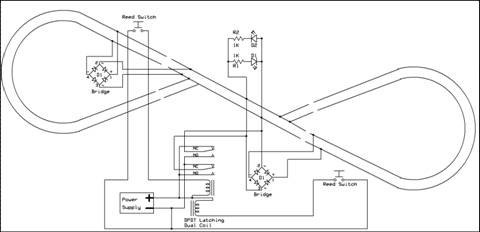
- Can be used to make
- a reverse loop controller
|
|
48
|
|
|
49
|
|
|
50
|
|
|
51
|
|

 Notes
Notes